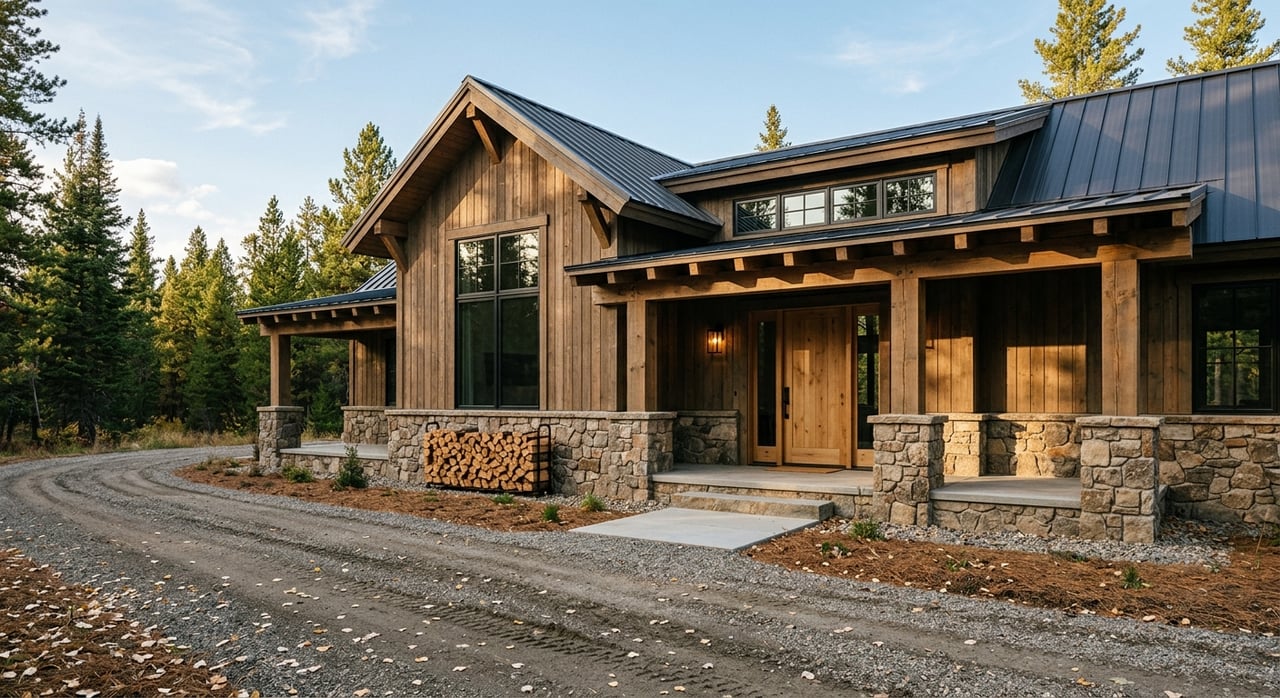
Wondering whether Columbia Falls gives you the Glacier-area lifestyle you want without Whitefish-level pricing? That is the question many buyers ask when they start looking at the Flathead Valley. If you want a clearer picture of daily life, housing, and the tradeoffs that come with a gateway town, this guide will help you sort through it. Let’s dive in.
Why Columbia Falls stands out
Columbia Falls has built a clear identity as a Gateway to Glacier community. The city and local chamber both lean into that role, and the city is investing in it through the Gateway to Glacier Safety and Mobility Improvement Project. That project includes 1.3 miles of roadway reconstruction, 1.7 miles of sidewalks, and 1 mile of multi-use pathways in the downtown corridor.
That matters if you are looking for more than a place to sleep between hikes. It suggests Columbia Falls is being shaped as an active, usable town with improving access for drivers, walkers, and cyclists. In other words, it is not just a pass-through stop on the way to the park.
The city is also a real working town. Local housing-planning materials note that tourism-related service jobs, lodging, food service, retail, and recreation all play an important role in the local economy. That mix gives Columbia Falls a more grounded, everyday feel than a purely resort-driven market.
What daily life feels like
If you picture a small town with a steady local rhythm, Columbia Falls checks many of those boxes. The chamber describes a growing mix of cafes, coffee shops, and restaurants, along with live music, trivia nights, bingo, community markets, and music in the park. In summer, the weekly community market brings together farmers, food producers, artists, and craftspeople.
Outdoor access is also part of regular life here, not just a weekend bonus. River’s Edge Park offers 28 acres of riverfront space, walking paths, and more than 900 feet of Flathead River access. Local recreation resources also point to neighborhood parks, a paved bike path, the Pinewood Aquatic Center, tennis courts, ballfields, and an outdoor bandshell.
For buyers who need practical day-to-day function, the basics are encouraging. The Census Bureau reports a mean travel time to work of 19.8 minutes. It also says 95.7% of households have a computer and 91.2% subscribe to broadband, which supports buyers who work remotely or want dependable regional connectivity.
Glacier access: a real advantage
One of Columbia Falls’ biggest draws is simple proximity. The chamber notes that from town, you can be driving through Glacier, heading into Flathead National Forest, or making your way toward the North Fork Road in about a 20-minute drive. That kind of access is hard to ignore if outdoor recreation is central to how you want to live.
You also get recreation options closer to home. The area includes riverfront walking, the Gateway to Glacier Trail, Cedar Flats trails, and access toward multiple river corridors and trailheads. For many buyers, that means your lifestyle does not depend on entering the park every single time you want to get outside.
That said, living closer to Glacier does not erase the need to plan ahead. According to the National Park Service, vehicle reservations are not required anywhere in Glacier in 2026, but Logan Pass will use a ticketed shuttle system and three-hour timed parking from July 1, 2026, through Labor Day on September 7, 2026. So yes, Columbia Falls improves access, but summer use still comes with rules and seasonality.
Columbia Falls housing at a glance
Columbia Falls has a more mixed housing stock than some buyers expect from a smaller Montana town. The city housing study says about 72% of units are single-family homes, 11% are duplex, triplex, or fourplex units, 13% are other multi-family units, and 4% are mobile homes. That variety creates more options than a market made up almost entirely of detached homes.
The age of the housing stock is mixed too. About 24% of the city’s housing has been built since 2010, while roughly half the homes were built before 1979 and half after. That means you are not shopping in a town that is entirely new construction or entirely older inventory.
The Census Bureau also points to a mixed owner-renter market. Columbia Falls had an estimated population of 5,713 in July 2024, up from 5,308 in the 2020 census. The same source reports a median household income of $75,766, an owner-occupied housing rate of 56.0%, and a 2019-2023 median owner-occupied home value of $384,400.
What the market means for buyers
If you are comparing Columbia Falls with nearby options, price is one of the clearest reasons to keep it on your list. Redfin reported a March 2026 median sale price of $463,500 in Columbia Falls. That compares with $487,000 in Kalispell and $1,057,500 in Whitefish.
That gap is meaningful. Columbia Falls can still serve as a more value-conscious Glacier-area base, especially for buyers who want access to the same broader Flathead Valley lifestyle without paying resort-town premiums. But it is important to keep the comparison in context.
Cheaper than Whitefish does not mean cheap. The city housing study says homes below $400,000 that do not need significant repairs are rare in the Columbia Falls area. So if your budget is tight and you want a turnkey property, you may need to adjust expectations on price, condition, or property type.
The short-term rental factor
Columbia Falls is not just influenced by residents. It is also shaped by seasonal demand and vacation use. The city housing study says about 90% of housing units are occupied by local residents, while unoccupied units are primarily seasonal or vacation use, including short-term rentals.
That visitor-facing pressure has become more visible over time. The same study found roughly 75 to 95 advertised short-term rentals within the city boundary in early 2025, and licensed vacation rentals had risen from 12 to 83 in five years. For you as a buyer, that helps explain why the market can feel more tourism-sensitive than a purely residential town.
This does not automatically make Columbia Falls a bad fit. In fact, some buyers may see that dynamic as part of the appeal. But it is worth recognizing that visitor demand is part of the housing story here, especially if you want a quieter, less seasonal feel.
Who Columbia Falls fits best
Columbia Falls may be a strong fit if you want a small-town home base with real Glacier access and a more approachable price point than Whitefish. It also makes sense if you like having trails, river access, parks, and everyday amenities close by. Buyers who want a town that feels lived-in, active, and outdoor-oriented often connect with Columbia Falls quickly.
It may be a weaker fit if you are hoping for a polished resort-town atmosphere. It may also disappoint buyers looking for a large supply of inexpensive turnkey homes. And if you want a market where summer visitor traffic and short-term rentals have very little influence, this may not be your best match.
The biggest takeaway is that Columbia Falls sits in the middle in a useful way. It is more grounded and often more affordable than Whitefish, but still tied to the same broader Flathead Valley pressures. For many buyers, that balance is exactly the point.
Questions to ask yourself
Before you decide whether Columbia Falls is right for you, it helps to get specific about what matters most. A few questions can sharpen the picture.
- Do you want easier access to Glacier and nearby trails, even if summer recreation still requires planning?
- Are you comfortable shopping in a market where sub-$400,000 turnkey homes are rare?
- Would you rather live in a working small town than in a more resort-oriented setting?
- Are parks, river access, and community events part of your ideal day-to-day lifestyle?
- Can you live with some seasonal tourism influence in exchange for location and relative value?
If you answer yes to most of those, Columbia Falls may deserve a serious look. If not, another Flathead Valley town may line up better with your goals.
Columbia Falls is appealing because it offers a real Montana small-town feel with strong outdoor access and a housing market that still sits below Whitefish. At the same time, it comes with tradeoffs that are worth understanding before you buy. If you want thoughtful, local guidance as you compare Columbia Falls with other Montana markets, Montana Property Brokers can help you find the right fit.
FAQs
Is Columbia Falls more affordable than Whitefish?
- Yes. Redfin reported a March 2026 median sale price of $463,500 in Columbia Falls compared with $1,057,500 in Whitefish, though Columbia Falls is still not a low-cost market.
Is Columbia Falls a good town for Glacier National Park access?
- It can be. Local sources say you can reach Glacier-area driving routes, Flathead National Forest access, and North Fork-area routes from Columbia Falls in about 20 minutes, though summer park access can still involve planning and rules.
What is the housing stock like in Columbia Falls?
- The city housing study says the market is mostly single-family homes, with added duplex, small multi-unit, larger multi-family, and mobile home inventory, plus a mix of older homes and newer construction.
Does Columbia Falls feel like a resort town?
- Not exactly. It is better described as a working town with a visitor-facing side, shaped by tourism, recreation, and seasonal demand rather than a full resort-town atmosphere.
Are there many short-term rentals in Columbia Falls?
- Yes. The city housing study found roughly 75 to 95 advertised short-term rentals in the city boundary in early 2025, and licensed vacation rentals increased from 12 to 83 over five years.
Is Columbia Falls a good fit for remote workers?
- It can be. Census data shows a mean commute of 19.8 minutes, with high rates of household computer access and broadband subscription, which supports buyers who need regular connectivity.