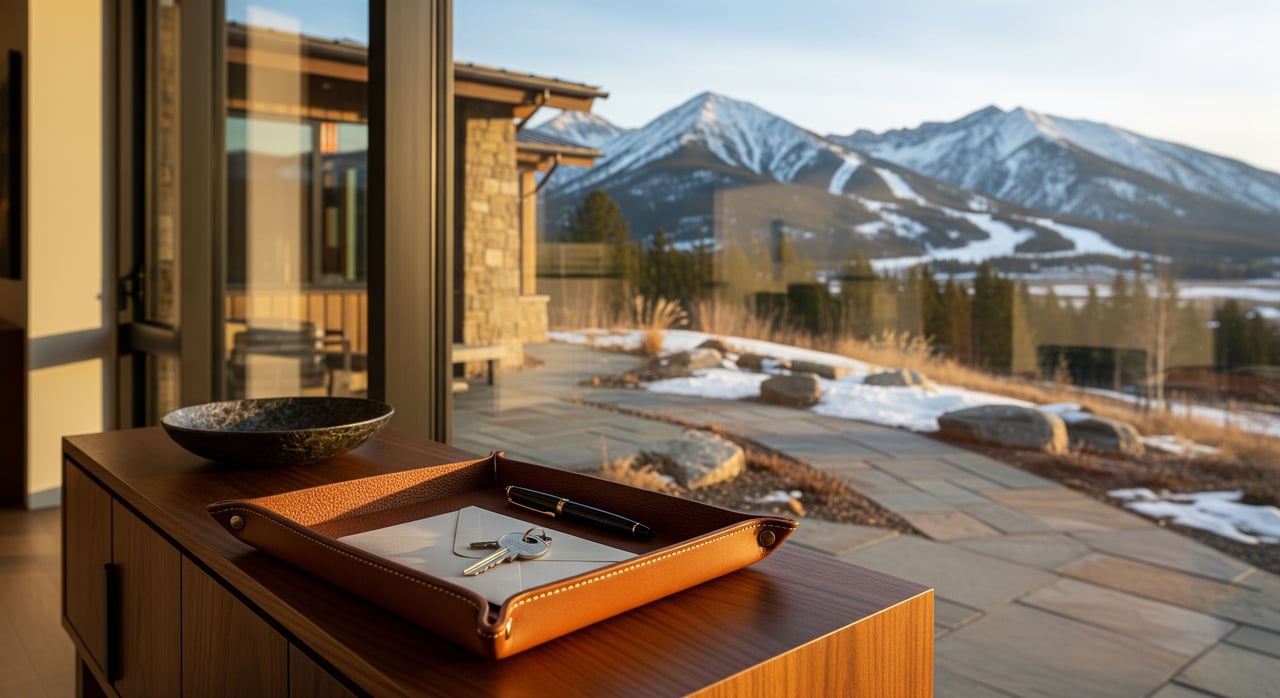
Buying in Big Sky can feel different from buying anywhere else. Between resort condos, second-home financing, and jumbo loans, it is easy to mix up earnest money with your down payment. You want to compete without risking more than you need to, and you want every dollar to be safe and accounted for.
In this guide, you will learn what each payment does, how they interact, typical timelines, and the Big Sky details that matter for condos and mountain homes. You will also see examples and a simple checklist to keep your funds protected from offer to closing. Let’s dive in.
Earnest money basics in Big Sky
Earnest money is a good-faith deposit that shows you intend to buy. It is typically held by an escrow or title company named in your contract and it is credited toward your costs at closing. If you terminate within allowed contingencies, you can usually get it back. If you default outside of those protections, the seller may be entitled to keep it under the contract.
In higher-priced resort markets like Big Sky, buyers often offer larger deposits to stand out. Nationally, you will hear 1 to 3 percent of the price, or sometimes fixed amounts. In competitive or higher-end deals, deposits can be higher. Exact expectations shift with market conditions, so rely on current local guidance when you write your offer.
Down payment basics
Your down payment is the portion of the purchase price you bring to closing, alongside your loan funds. It sets your loan-to-value ratio and is not typically refundable after closing. Lenders set minimums based on loan program, property type, and your credit.
For second homes, conventional loans often require 10 to 20 percent down. In resort or condo settings, lenders may expect 15 to 20 percent or more. Many Big Sky purchases exceed conforming loan limits, which means jumbo loans that often require 20 percent or higher and documented liquid reserves.
Key differences at a glance
- Purpose: Earnest money signals commitment and ties to contingencies; your down payment funds the purchase at closing.
- Timing: Earnest money is due soon after acceptance; your down payment is due at closing.
- Refundability: Earnest money can be refundable if your contingencies allow it; your down payment is not typically refundable.
- Who controls the rules: Earnest money follows the purchase contract; down payment rules come from your lender and loan program.
How they work together at closing
Your earnest money does not add to your total cost. It is a prepayment that is applied to your down payment and closing costs once you close. If you wired a 20,000 dollar deposit and your total down payment is 300,000 dollars, you would bring 280,000 dollars to closing, plus any remaining closing costs.
Big Sky financing realities
Many Big Sky homes and condos sit above conforming loan limits, so expect jumbo underwriting that may require stronger credit, larger down payments, and more documented reserves. If your purchase is a second home that you will occupy part time, your loan will follow second-home rules that differ from primary residences.
Condos can add extra steps. Lenders often review the project’s financials and eligibility before approval, which can affect timelines and down payment expectations. For single-family homes, plan for rural and mountain specifics such as well and septic systems, access roads, and easements, which can influence insurability and underwriting.
Contingencies that protect your deposit
Strong contingencies help you keep control of your earnest money. Common protections include:
- Financing contingency to protect you if your full loan approval does not come through in time.
- Appraisal contingency so you can renegotiate or terminate if value comes in under the contract price.
- Inspection contingency for general condition, with a defined review period.
- Title contingency to review the preliminary title report and resolve issues.
- HOA and resale document review for budgets, reserves, rental rules, and special assessments, which is critical for resort and condo properties.
- Well and septic contingencies for water quality, yield, permits, and septic functionality where applicable.
- Wildfire and insurance contingency to confirm insurability and premium costs for mountain risks.
- Short-term rental approval contingency if you plan to rent the home for vacation stays.
- Mineral rights and easements review so you know what conveys and how access is managed.
Clear deadlines and wording in your contract are essential. If a contingency is not met or a deadline passes without resolution, your deposit could be at risk.
Timeline from offer to closing
Every deal is unique, but here are common ranges in Big Sky transactions:
- Earnest money due: usually within 24 to 72 hours after mutual acceptance, per the contract.
- Inspection period: often 5 to 14 days, longer for complex properties.
- Appraisal: typically completed within 1 to 2 weeks after ordering.
- Financing and underwriting: 30 to 45 days for many conventional loans; 45 to 60 days or more for jumbo or complex condo projects.
- HOA and document delivery: allow 7 to 14 days to receive and review documents.
- Closing date: negotiable, and often coordinated with seasonal schedules and lender capacity.
Your lender will also require that funds be seasoned and verifiable. Large deposits that appear in your bank accounts shortly before closing will need explanation and documentation.
Keeping funds secure in Big Sky
Your contract should name a trusted escrow or title holder for earnest money. In Montana, this is commonly a title company, brokerage trust account, or attorney, and you should receive written escrow instructions.
To avoid wire fraud, always verify wiring instructions by phone using a number you know is correct for the title company or escrow officer. Many title companies use secure portals. Never rely on emailed instructions alone. If a dispute arises over release of earnest money, your contract will spell out the path for resolution, which can include mediation, arbitration, or litigation.
Big Sky examples
- Ski condo at 700,000 dollars: a typical earnest money range might be 1 to 2 percent, or 7,000 to 14,000 dollars. A second-home conventional loan with 15 percent down would require 105,000 dollars at closing, with your earnest money credited toward that amount. The lender will likely review the condo project’s eligibility and HOA financials.
- Single-family vacation home at 1,800,000 dollars: in a competitive setting, the seller might expect 2 to 5 percent earnest money, or 36,000 to 90,000 dollars. A jumbo loan could require a 25 percent down payment, or 450,000 dollars, along with documented reserves. If the appraisal comes in low and you still want to close, you may need to bring more cash or renegotiate the price if your contract allows.
These numbers are illustrative. Exact amounts depend on price, competition, property type, your financial profile, and your lender’s requirements.
Checklist for out-of-state and second-home buyers
Before you make an offer
- Get preapproved and confirm whether your loan will be conforming or jumbo.
- Ask about current earnest money norms for similar Big Sky properties.
- Confirm who will hold the deposit and acceptable payment methods.
- Work with a local agent familiar with resort condos and mountain due diligence.
When drafting the offer
- Set clear deadlines for inspection, financing, appraisal, HOA review, and any well or septic testing.
- If you plan short-term rentals, add a contingency to confirm rules.
- Name the escrow holder and the dispute-resolution process in the contract.
After acceptance
- Order inspections specific to cold-climate and mountain homes, including roof, heating, water, septic, and access road considerations.
- For condos, verify HOA budgets, reserves, special assessments, and management practices.
- Confirm the appraisal order and allow time to solve any value gaps.
At closing
- Call your title or escrow officer to verify wiring instructions before sending funds.
- Prepare bank statements and source documentation to meet seasoning requirements.
The bottom line
Your earnest money shows commitment and locks in your right to move forward. Your down payment funds the purchase and is shaped by your loan, the property, and the market. In Big Sky, plan for larger price points, possible jumbo financing, and careful condo or rural due diligence. Keep your contingencies clear, your timelines tight, and your funds secure.
If you want a steady hand on your Big Sky purchase, connect with a local, high-touch team that treats every step with care. Reach out to Montana Property Brokers to talk through your plan or to Receive Exclusive Off-Market Listings.
FAQs
What is earnest money in Big Sky real estate?
- It is a good-faith deposit held in escrow that shows commitment, is credited to your costs at closing, and can be refundable if your contract contingencies allow.
How much earnest money should I offer on a Big Sky condo?
- Ranges often start around 1 to 3 percent, but competitive resort deals may see higher deposits, so follow current local guidance for your specific property and price point.
What down payment do lenders require for a Big Sky second home?
- Conventional loans often require 10 to 20 percent, while condos and jumbo loans commonly mean 15 to 20 percent or more plus reserves, depending on your profile and the property.
When are earnest money and down payment due in Big Sky?
- Earnest money is usually due within 24 to 72 hours after acceptance, while your down payment is due at closing once the lender is ready to fund.
Can I recover my earnest money if the appraisal is low?
- If your contract includes an appraisal contingency and value comes in low, you can usually renegotiate or terminate and recover your deposit within the agreed timelines.
What inspections matter most for a Big Sky single-family home?
- Prioritize general inspection plus roof, heating system performance, insulation, well yield and water quality, septic functionality, drainage, and access roads, including snow removal arrangements.