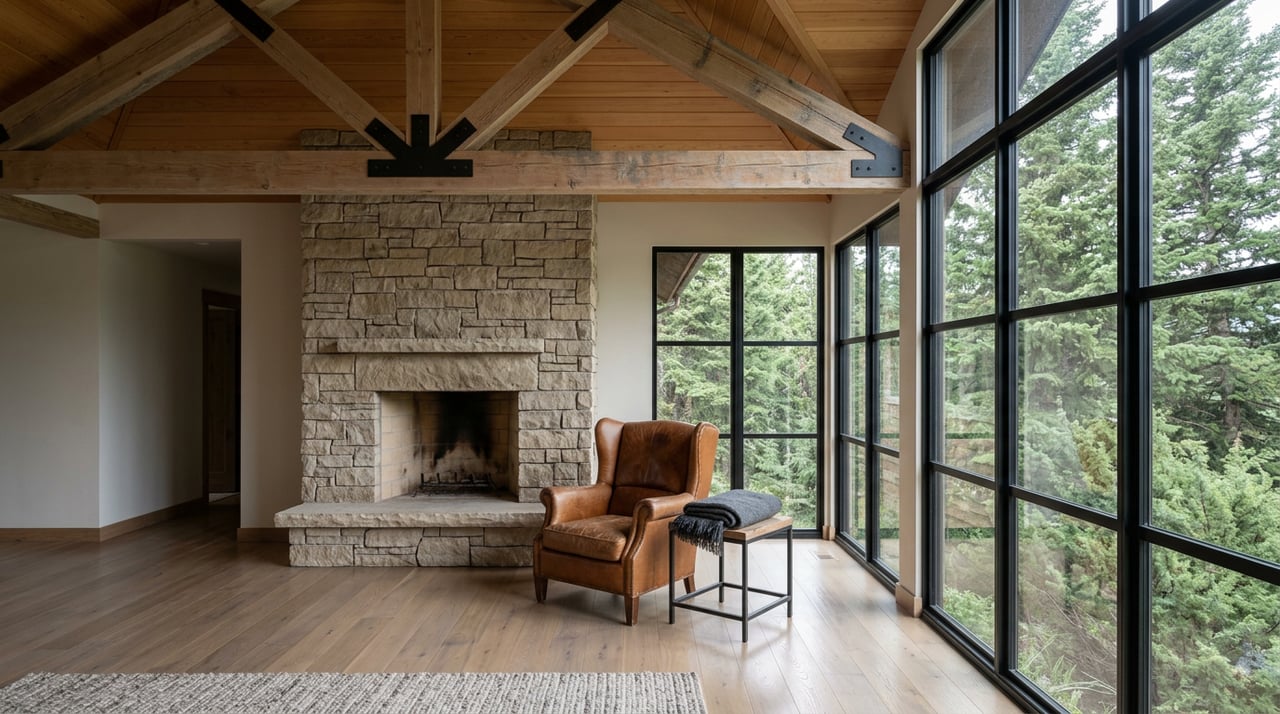
Picture two buyers closing the same month on nearly identical three-bedroom homes a few blocks apart in Whitefish. Same price. Same square footage. Same view of the Whitefish Range from the back deck. One of them writes a materially smaller property tax check every year than the other, and neither number has anything to do with the price they paid.
The difference is occupancy. Not the neighborhood, not the finishes, not even the purchase price. In 2026, Montana finished rolling out a property tax structure that treats a home you live in and a home you visit as two entirely different assets, and Whitefish, where a large share of buyers are shopping for a second home or a vacation rental rather than a full-time residence, is where that distinction shows up hardest.
The Line the State Drew This Year
The Whitefish Pilot reports that Montana's new property tax law, signed by Governor Greg Gianforte and phased in starting with 2025 interim rates, reaches full strength on 2026 tax bills. The mechanics are simple even if the politics weren't: according to the Montana Department of Revenue, homes where the owner lives at least seven months of the year, or that are rented out long-term for at least seven months on leases of 28 days or longer, qualify for a reduced homestead rate. Everything else, meaning second homes, vacation cabins, and short-term rentals, gets taxed at a flat 1.90 percent of assessed value.
The Department of Revenue's own projections show the split in stark terms. By the time the law is fully phased in, the average owner-occupied home is expected to see its tax bill drop about 18 percent relative to 2024. The average long-term rental drops about 22 percent. Properties that don't qualify for homestead status are projected to see bills rise a cumulative 68 percent over the same period. Those aren't small print numbers. They're the state's central estimate of what this policy does, and they were published well before anyone had to write a check under the new rules.
Homestead status doesn't travel with the deed. A seller's exemption ends the moment the property changes hands, as Montana Free Press explains, and the buyer has to file fresh with the Department of Revenue to claim it for themselves, assuming they'll actually live there long enough to qualify. Every year, the application window runs from December 1 through March 1 for that year's tax bill. Anyone buying a Whitefish home this fall who plans to make it their primary residence should mark that date now.
What That Looks Like in Dollars
Run the math on an ordinary house instead of a hypothetical one. Whitefish's median sale price over the three months ending in June 2026 was $895,000, according to Redfin, down about 10 percent from the same period a year earlier as the market has cooled from its 2022 peak. Apply the flat 1.90 percent rate that now applies to any second home or short-term rental at that price point, and you get roughly $17,000 a year in state-level property tax alone, before a single mill levy from the county, city, or school district gets added on top.
That's the number a homestead-qualified owner of the same house never sees, because they're taxed on the lower tiered structure instead. The exact bracket math is granular enough that it's worth running your own address through the Department of Revenue's tools rather than trusting a rule of thumb, but the direction and scale of the gap are not in dispute. The state's own modeling puts the difference between a rising bill and a falling one at roughly 80 to 90 percentage points of relative change over two years, applied to the same house, based entirely on who's sleeping in it and for how long.
| Qualifies for Homestead | Does Not Qualify | |
|---|---|---|
| Who it covers | Primary residence (7+ months/year) or long-term rental (28+ day leases, 7+ months/year) | Second homes, vacation cabins, short-term rentals |
| 2026 rate structure | Reduced, tiered rate | Flat 1.90% of assessed value |
| Projected trend by 2026 | Owner-occupied bills down ~18% on average; long-term rentals down ~22% | Bills up a cumulative ~68% on average |
| Application | Must file with MT Dept. of Revenue; does not transfer to a new owner | No application needed; default classification |
The Second Line: Where the Loan Limit Sits
The tax code isn't the only place where a single number quietly reclassifies a purchase. The 2026 baseline conforming loan limit set by the Federal Housing Finance Agency is $832,750, up from $806,500 in 2025. Stay under that loan amount and a buyer is in conventional territory, with the pricing and underwriting flexibility that comes with it. Cross it and the loan becomes jumbo, which typically means tighter debt-to-income requirements, a larger down payment, and its own pricing.
Do the arithmetic backward from a standard 20 percent down payment and the breakeven purchase price is about $1.04 million. Below that, a conventional 20 percent down buyer stays under the conforming ceiling. Above it, they don't, no matter how strong their credit or income looks on paper. Whitefish's market spans well past that line. Entry-level condos and older homes sit in the $600,000s, but the town's mid-range inventory regularly runs from the $700,000s past $1.2 million, meaning a buyer who isn't shopping the luxury tier at all can still land on the jumbo side of the ledger simply because that's where this particular market's ordinary homes sit.
For context, Griffin Funding reports that Flathead County's FHA loan limit for a single-family home runs as high as $754,400, one of the higher ceilings in the state. But FHA loans require owner-occupancy, as LendingTree explains, which puts them out of reach for the classic second-home buyer entirely. It's another version of the same pattern: the financing rules, like the tax rules, keep asking the same underlying question. Is this where you actually live?
The Zoning Line Nobody Reads Before They Offer
Even a buyer who has the tax math and the loan math sorted out can run into a third wall if the plan is to offset those costs with short-term rental income. The City of Whitefish permits short-term rentals only in specific zoning districts, currently WB-3, WRR-1, WRR-2, WRB-1, and WRB-2. Buy a house in an ordinary residential zone with plans to list it by the night, and the zoning code, not the tax code, is what stops you. The city's actual ordinance spells out the requirements, including an annual fire inspection and monthly resort tax remittance, in Section 11-3-35 of its municipal code.
Zoning isn't the only gate. In a case that reached the Montana Supreme Court, neighbors near Whitefish successfully argued that a subdivision's covenants barred short-term rental use even though the covenants never used those exact words. The court pointed to the covenants' broader restrictions on business activity and nuisance conduct as sufficient grounds to shut the rental down. A property can be zoned correctly and still be off-limits to short-term use if the HOA documents say so, and plenty of buyers don't find that out until after closing.
Before You Write the Offer
A few checks worth doing before, not after, you sign:
- Confirm whether the property sits inside Whitefish city limits or unincorporated Flathead County. Zoning authority and STR permitting differ between the two.
- Pull the CC&Rs and HOA minutes, not just the zoning map, if short-term rental income is part of the plan.
- Ask your lender where the loan amount lands relative to the current conforming limit before you get attached to a number, since a small change in down payment can move you across the jumbo line.
- Don't assume the seller's homestead status transfers. It doesn't. File your own application with the Department of Revenue if you'll qualify.
- If the property is currently operating as a rental, ask for its permit history and resort tax filings directly, since booking platforms don't always remit every tax owed.
A Few Questions Worth Asking Before You Offer
Does the second-home tax apply everywhere in Montana, or just resort towns like Whitefish? It's statewide. The Department of Revenue's county-by-county projections show the average shift varies by local tax base and mill levies, but the homestead-versus-flat-rate structure itself applies the same way in every county.
If I split time between two states, can I still qualify for homestead in Whitefish? The law requires seven months of occupancy per year to qualify as a primary residence. Buyers who split time roughly evenly between two properties should run their specific situation past the Department of Revenue's published guidance at homestead.mt.gov before assuming either way.
Can I convert a second home into a long-term rental to get the lower rate? Long-term rentals, defined as leases of 28 days or more for at least seven months a year, do qualify for the reduced homestead-adjacent rate. That's a real option for owners willing to give up short-term rental income in exchange for the tax break, though it's worth running the numbers on both sides before deciding.
The house doesn't change when you buy it. The classification does. In Whitefish right now, that single distinction, homestead or not, moves more money than most of the features that show up in a listing description. Anyone shopping this market with a second home in mind deserves to run those numbers before they fall for the view.
If you're weighing a purchase in Whitefish or anywhere else in the Flathead Valley and want a local read on how a specific property's classification, financing, and zoning actually line up, Montana Property Brokers works through exactly this kind of detail with clients before an offer goes in, not after. Reach out to receive exclusive off-market listings and a conversation grounded in what a property will actually cost you to own.
This article is general information, not legal, tax or financial advice. Consult a qualified professional about your situation.